
Package Integrity Testing
USP 1207
Package Integrity Evaluation STandard
Introduction to USP 1207
USP 1207 provides comprehensive guidance for evaluating the integrity of sterile pharmaceutical packaging systems. The standard focuses on ensuring that container-closure systems can protect sterile products throughout their entire lifecycle, from manufacturing and transportation to storage and final use.

Konteineri sulgemise terviklikkuse testimine farmaatsiatooted
For sterile pharmaceutical products, packaging integrity is not only related to preventing product leakage but also preventing the entry of microorganisms, moisture, oxygen, and other environmental contaminants. A package with insufficient integrity may compromise product quality, stability, and patient safety.
USP 1207 introduces a systematic approach for selecting, validating, and applying package integrity test methods. It covers different leak detection technologies and explains how appropriate methods should be selected according to package design, material properties, and product requirements.
Sterile packaging systems covered by USP 1207 include vials, bottles, ampoules, syringes, cartridges, flexible bags, pouches, and combination drug-device packages. These systems commonly use nonporous barrier materials where even small leaks may affect sterility assurance.
Konteineri sulgemise terviklikkuse testimine farmaatsiatooted
An ampulli lekkekatse is an important application of pharmaceutical package integrity evaluation, especially for glass or polymer ampoules containing sterile injectable products. Ampoules must maintain a reliable seal after filling and sealing because any leakage path may allow contamination during storage.
The purpose of an ampoule leak test is to identify potential defects caused by:
- Improper sealing conditions
- Glass or plastic defects
- Cracks or microchannels
- Closure system failures
- Manufacturing process variations
Traditional leak detection methods often rely on destructive inspection, such as dye penetration or immersion testing. However, modern pharmaceutical quality systems increasingly require faster and nondestructive approaches that allow manufacturers to evaluate package performance without damaging the product.
USP 1207 emphasizes the importance of selecting suitable technologies based on leak size requirements, package characteristics, and product protection needs. A reliable leak test method helps pharmaceutical companies verify that their container-closure systems maintain sterility throughout the product shelf life.
Konteineri sulgemise terviklikkuse testimine farmaatsiatooted
USP 1207.2 focuses on Package Integrity Leak Test Technologies, describing different approaches for detecting leaks in sterile packaging systems.
A leak is generally considered a pathway through which gas or liquid can pass between the internal package environment and the external environment. The leakage behavior depends on factors such as leak size, pressure difference, package structure, and test conditions.
Common package integrity leak detection technologies include:
- Vacuum decay testing
- Tracer gas detection
- Pressure decay testing
- Electrical conductivity methods
- Dye penetration methods
Among these methods, instrument-based gas measurement techniques are widely used because they provide quantitative results, good repeatability, and compatibility with quality control processes.
The selection of a leak test method should consider:
Required detection sensitivity
Package material characteristics
Product configuration
Testing speed requirements
Whether the method is destructive or nondestructive
For routine pharmaceutical production, nondestructive methods provide significant advantages because they allow inspection without sacrificing valuable products.
Konteineri sulgemise terviklikkuse testimine farmaatsiatooted
The vaakumi lagunemise meetod is one of the commonly applied nondestructive techniques for evaluating package integrity. This method detects leakage by monitoring pressure changes after creating a controlled vacuum environment around the package.
During testing, the package is placed inside a sealed test chamber connected to a vacuum source and pressure measurement system. The chamber is evacuated to a predefined vacuum level, and the system then monitors pressure changes over a specific period.
The basic testing process includes:
- Package placement
The sample is positioned securely inside the test chamber. - Vacuum application
Negative pressure is applied to create a pressure difference between the package and chamber environment. - Stabilization stage
A settling period allows package expansion or material movement to stabilize. - Measurement stage
The system monitors pressure increase caused by possible leakage. - Result evaluation
The measured vacuum decay value is compared with predefined acceptance criteria.
The vacuum decay method provides quantitative leakage evaluation and is suitable for rigid and flexible nonporous pharmaceutical packages when appropriate test parameters are established.

Package integrity testing plays an important role throughout the pharmaceutical product lifecycle. During development, testing helps engineers select suitable packaging designs. During production, it supports process verification and quality monitoring. During stability studies, it confirms that packaging continues to protect the product over time.
A properly validated leak testing method helps manufacturers:
- Improve sterile product safety
- Reduce contamination risks
- Identify sealing process problems
- Meet regulatory expectations
- Improve confidence in container-closure systems
USP 1207 provides a scientific framework for establishing effective package integrity programs, helping pharmaceutical companies select appropriate technologies and maintain consistent product protection.
Konteineri sulgemise terviklikkuse testimine farmaatsiatooted
Nondestructive Leak Tester Solution for USP 1207 Applications
A Nondestructive Leak Tester provides an efficient solution for pharmaceutical manufacturers who need reliable package integrity verification without damaging samples.
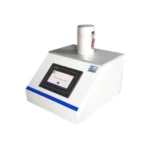
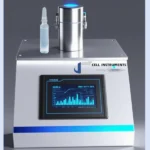
Cell Instruments MLT-01 Mikro lekke tester applies vacuum decay technology for quantitative leak detection of nonporous rigid and flexible packages. The system uses a controlled test chamber, vacuum source connection, and high-resolution pressure measurement system to identify leakage by monitoring pressure changes.

Key advantages include:
- Nondestructive testing for valuable pharmaceutical products
- High sensitivity for detecting small leakage changes
- Quantitative leak evaluation
- PLC and HMI controlled operation
- Customized chamber design for different packages
The MLT-01 can support quality control laboratories and pharmaceutical manufacturers in verifying ampoules, vials, bottles, and other sterile package systems.
Application Materials for USP 1207 Package Integrity Testing
USP 1207 package integrity testing applies to various sterile pharmaceutical packaging formats, including:
Glass Ampoules
Glass ampoules require reliable sealing performance because they directly protect injectable medicines from contamination.
Vials and Bottles
Container-closure systems using elastomeric stoppers or screw caps require integrity verification to ensure long-term protection.
Syringes and Cartridges
Pre-filled syringes and drug delivery systems require sensitive leak detection because packaging failure may affect dosage accuracy and sterility.
Flexible Bags and Pouches
Flexible pharmaceutical packaging requires specialized testing methods because deformation and material flexibility can influence test results.


Võtke ühendust
No. 5577 Gongyebei Rd, Licheng, Jinan, 250109, Shandong, P.R.C.
trade@celtec.cn
+86 185 6001 3985
 ET
ET  EN
EN  ES
ES  DE
DE  FR
FR  IT
IT  AR
AR  KO
KO  JA
JA  RU
RU  PT
PT  ID
ID  BG
BG  CS
CS  DA
DA  EL
EL  FI
FI  HU
HU  LT
LT  LV
LV  NL
NL  PL
PL  RO
RO  SK
SK  SV
SV  SL
SL  UK
UK  TR
TR